the idea
One moving sale for each seller
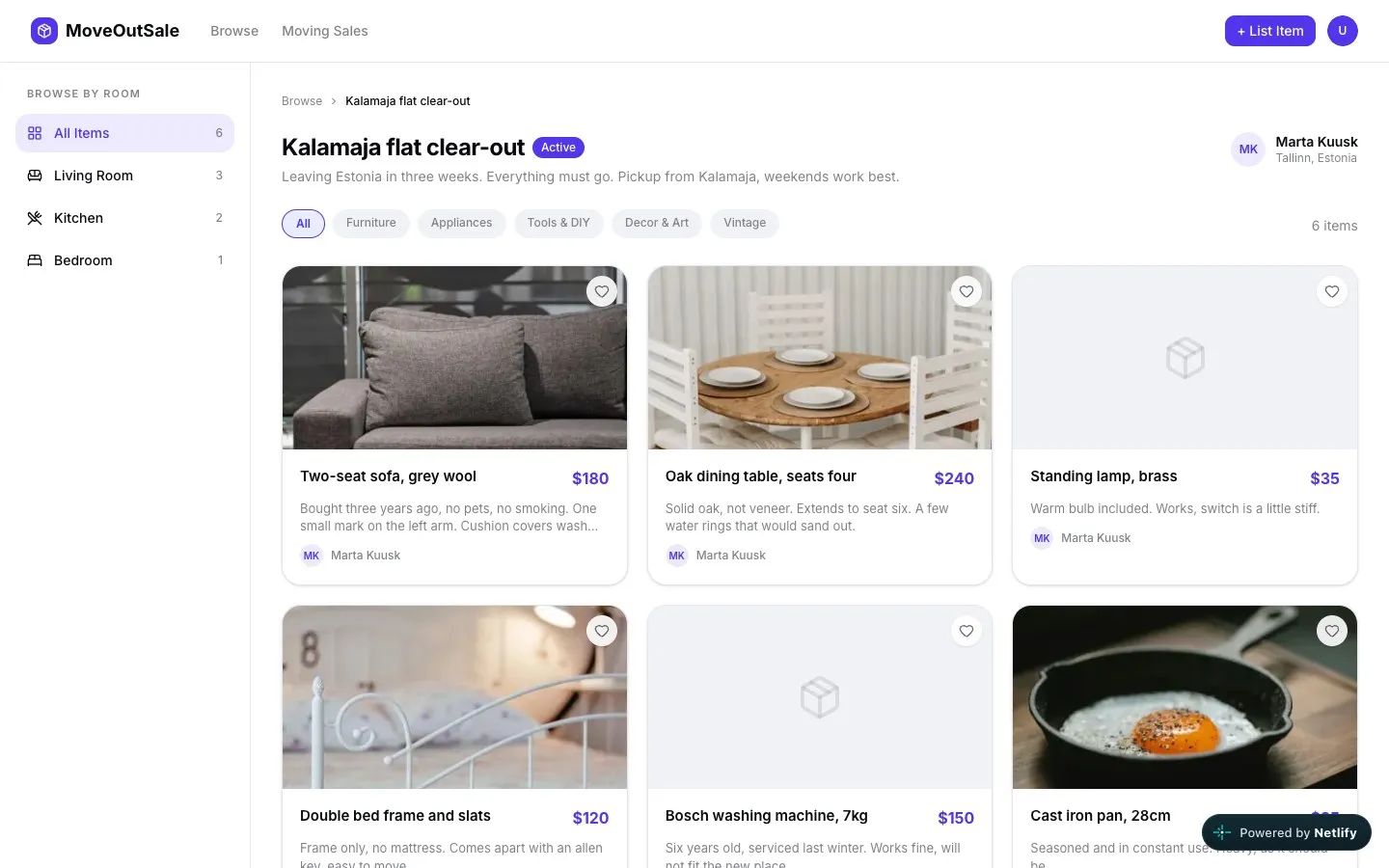
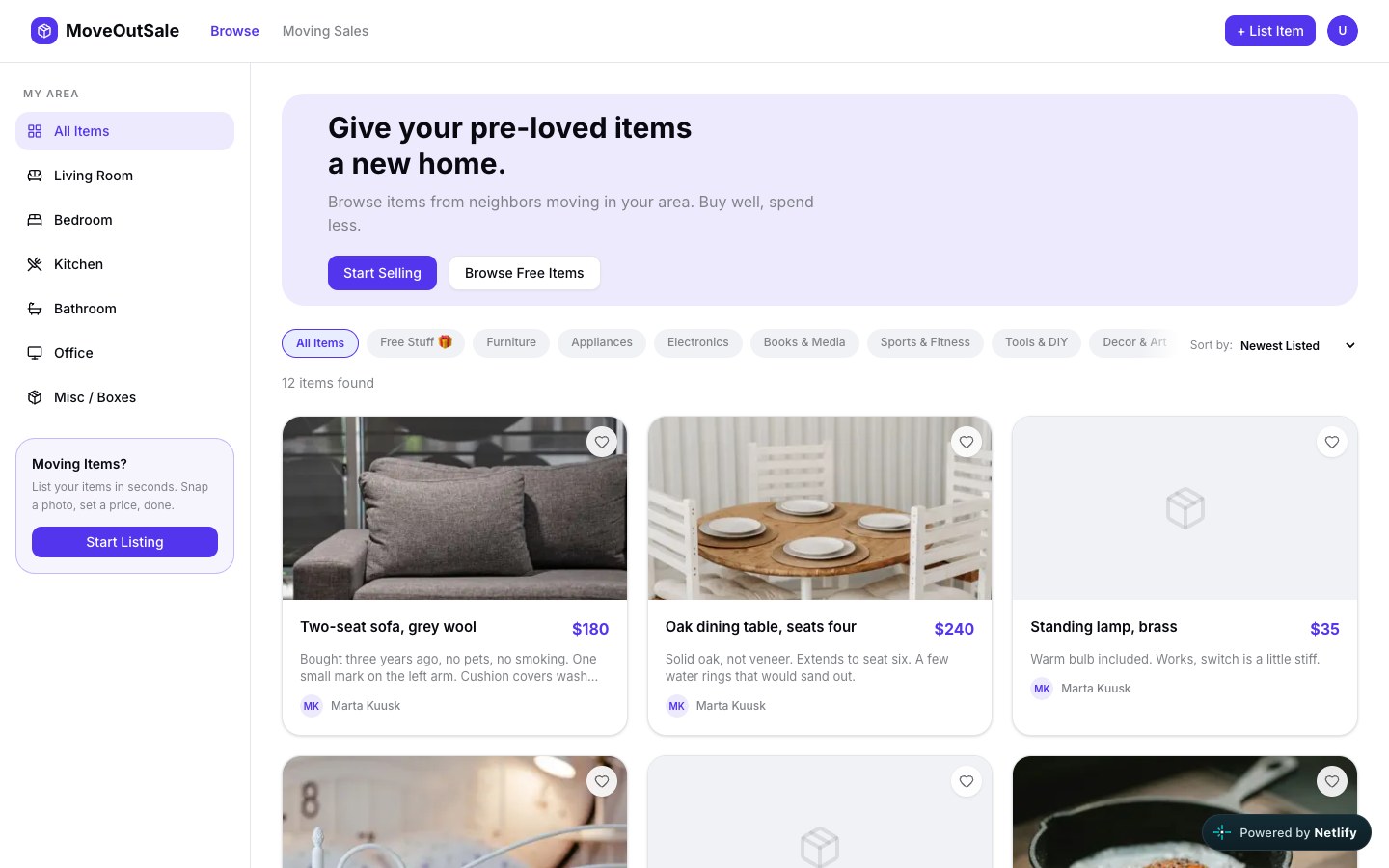
A moving sale has everything one person sells before they leave. Buyers see all of that person’s items in one place.
Side project · 2026 · marketplace
A marketplace for people who leave a city and have three weeks to sell the furniture from a whole flat. All of one person's listings go into one moving sale.
problem
When one person sells everything before a move, buyers see many separate posts.
decision
I put all of one seller's listings into one moving sale. The public demo uses its own database, so visitors cannot reach real data.
result
Anyone can try the demo as a signed-in user. The demo resets at night, but only if someone changed something.
the part that was interesting
the idea
A moving sale has everything one person sells before they leave. Buyers see all of that person’s items in one place.
the interesting part
The demo uses its own Supabase project (the database and sign-in service). It never has the keys to the real site. The demo signs in every visitor with their own temporary account. Database rules (row-level security) stop visitors from seeing each other’s data. A noindex header tells search engines not to list what visitors type.
a small thing
Every night, a scheduled job deletes the demo data and loads the starting data again, but only if someone changed something. On most nights nobody did, so the job does nothing.
the stack
I built it with Next.js (App Router). Supabase gives the Postgres database, sign-in, and file storage. Every table has row-level security, so the database itself checks who can read or change each row. The browser makes photos smaller before it uploads them. Playwright tests cover the main flows.
A case study page that moves as you scroll. Chapter cards zoom open into full-screen chapters with working prototypes.
Code code